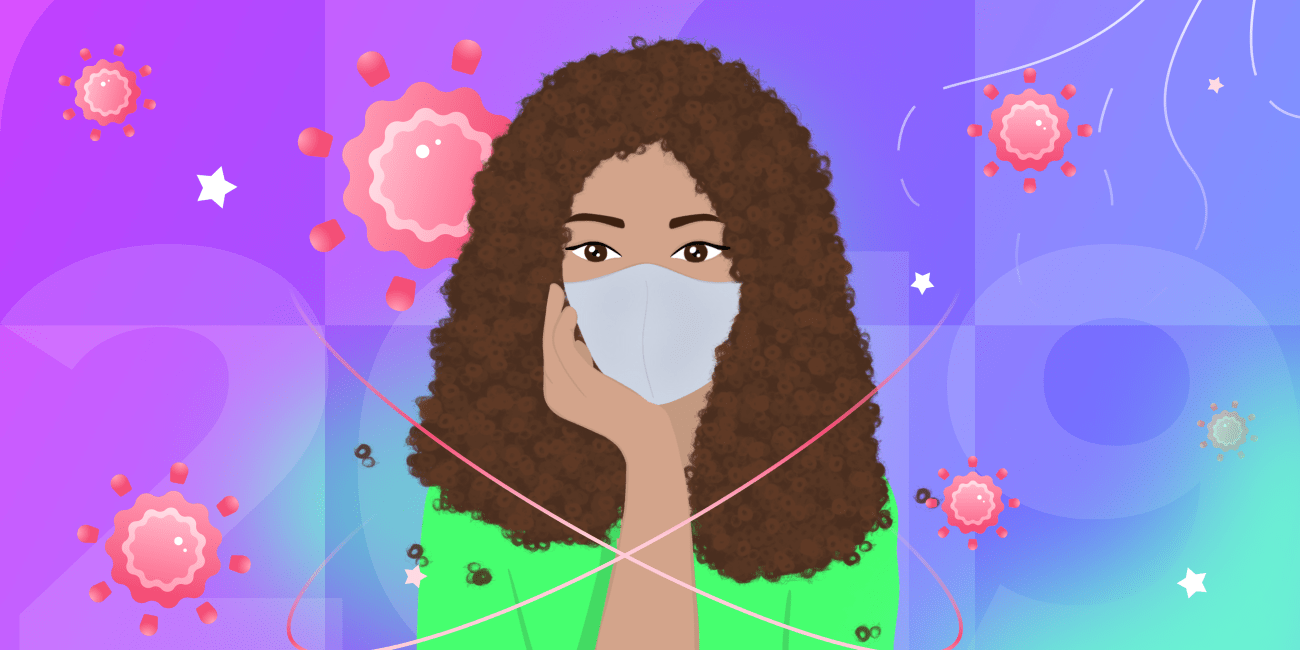
In addition to the more common pulmonary and cardiovascular symptoms associated with COVID-19 infection, nearly half of affected individuals have experienced some form of post-COVID hair loss, with extent of loss associated with severity of infection [1].
I thought COVID affected my heart and lungs! Why is my hair falling out?
Post-COVID hair loss, also known as telogen effluvium, occurs due to a disruption in the hair growth cycle caused by physical or emotional stress like that induced by COVID-19 infection. As a result, a larger number of hair follicles entering the resting – or telogen – phase, leading to hair shedding a few months later [2].
Hair loss can be distressing, but the good news is that telogen effluvium is temporary and that there are steps you can take to promote healthy hair regrowth.
Who is at risk and what should I look for?
Anyone can develop telogen effluvium, but females between the ages of 30 and 60 are at heightened risk. High fever, severe infection, and psychological stress – all factors that are associated with COVID – can also increase risk.
Two to three months following COVID infection, you might notice increased hair loss on your hairbrush, in the shower, or on your pillow. Affected individuals may also notice hair thinning concentrated on the top of their head and dry hairs that fall out easily. Hair shedding associated with telogen effluvium is heavy and rapid versus the slow, gradual hair thinning that is associated with male- and female-pattern baldness [2].
What can I do about telogen effluvium?
While treatment is not needed and the condition usually resolves on its own within 6 months, there are several steps you can take to reduce your risk of hair loss and promote hair regrowth during this time [3]:
Practice good hair care. Avoid using harsh chemicals, excessive heat styling, and tight hairstyles. Opt for gentle hair care practices like using a wide-toothed comb, avoiding vigorous towel drying, and using natural, sulfate-free shampoos and conditioners. Limit the use of heat styling tools and allow your hair to air dry to minimize breakage and hair damage.
Prioritize a nutrient-rich diet. Incorporate extra protein into your diet and consider taking a multivitamin with vitamins A, B, C, D, E, zinc, biotin and iron, which have been shown to promote healthy hair and skin. Avoid restrictive or fad diets, as rapid weight loss can trigger telogen effluvium.
Manage stress and promote overall well-being. Stress can exacerbate hair loss, so it is essential to
manage it effectively. Engage in stress-reducing activities like yoga and meditation and ensure that you are prioritizing getting 7 to 9 hours of sleep each night.
Over-the-counter (OTC) medications like minoxidil (Rogaine) that you apply to your scalp can be
effective in promoting hair regrowth but may come with unwanted side effects like headache, scalp irritation, and unusual hair growth. If you are currently pregnant or breastfeeding, skip this step.
Post-COVID hair loss can be an emotionally distressing experience. Remember that the condition is usually temporary, and that patience is key before seeing noticeable regrowth. If you have concerns or if hair loss persists, consult with a dermatologist or trichologist to obtain specialized guidance tailored to your specific needs.
Disclaimer: This information is for educational purposes only, and is not meant to be used for diagnosis, prognosis, or treatment purposes. This is not medical advice. Please see your physician or care provider with any questions or concerns.
Bibliography
[1] P. Müller‐Ramos, M. Ianhez, C. C. Silva de Castro, C. Talhari, P. R. Criado, and H. Amante Miot,
“Post‐COVID‐19 hair loss: prevalence and associated factors among 5,891 patients,” International Journal of Dermatology, Jan. 2022, doi: https://doi.org/10.1111/ijd.16041.
[2] F. Asghar, N. Shamim, U. Farooque, H. Sheikh, and R. Aqeel, “Telogen Effluvium: A Review of the
Literature,” Cureus, vol. 12, no. 5, May 2020, doi: https://doi.org/10.7759/cureus.8320.
[3] “Telogen Effluvium: Symptoms, Causes, Treatment & Regrowth,” Cleveland Clinic.
https://my.clevelandclinic.org/health/diseases/24486-telogen-
effluvium#:~:text=Telogen%20effluvium%20should%20resolve%20on (accessed Jun. 26, 2023).