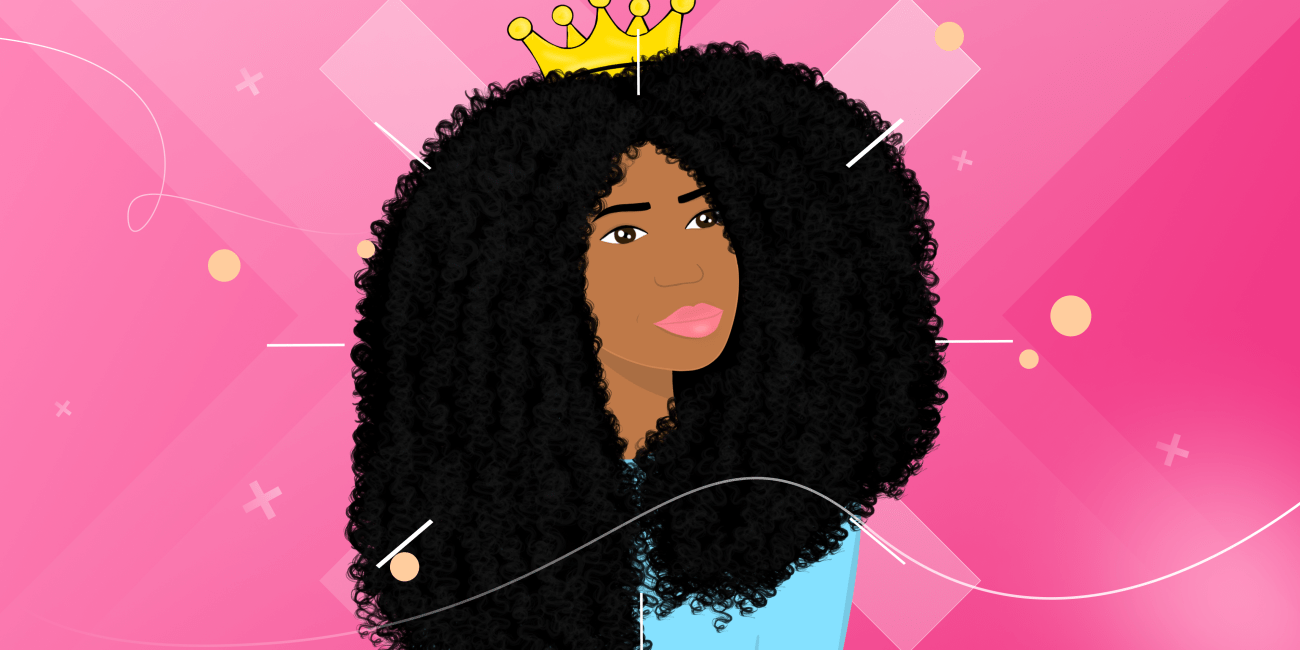
In recent years, the conversation around diversity, equity, and inclusion has expanded to encompass a broad range of
issues, and hair is no exception. Hair discrimination refers to the unjust treatment, bias, or prejudice against individuals based on their natural hair texture or style, including braids, twists, locs, or afros [1].
Hair discrimination disproportionately affects individuals with natural hair styles academically and professionally. Black women with coily or textured hair are 2 times as likely to experience microaggressions in the workplace and 2.5 times more likely to be perceived as “unprofessional”, with 25% of Black women believing that they have been denied a job due to their hair [2].
Black women not only experience hair discrimination from workplace management but also report feeling pressured to change to fit workplace stereotypes, with two thirds of Black women reporting having changed their hair for a job interview. Unfortunately, these opinions toward natural hair start far before job seeking age, with 86% of Black female teens reporting experiencing hair discrimination by age 12 [2].
Shouldn’t existing anti-discrimination laws cover hair discrimination? Not necessarily.
In short, federal law only focuses on a person’s “immutable”, or unchangeable, traits. For example, Title VII of the 1964 Civil Right Act prohibits employment discrimination based upon race, color, religion, national origin, and sex,
with other laws in effect that protect individuals from discrimination based upon disability, pregnancy, familial status, veteran status, and genetic information. However, a person’s “appearance” is not included in any of these criteria [1].
Enter the CROWN (“Creating a Respectful and Open World for Natural Hair”) Act, which seeks to close gaps in current legislation by making hair discrimination not simply “appearance bias” but a conduit to racial discrimination. Spearheaded by State Senator Holly J. Mitchell of California and companies like Dove, Unilever, and LinkedIn, the CROWN Act makes it explicitly illegal to discriminate on the basis of hair. While the Bill received bipartisan support and was ratified by the United States House of Representatives in March 2022, it failed to garner adequate support in the Senate [3].
Despite the progress made, the fight against hair discrimination is far from over. To date, only 22 states have enacted the CROWN Act into law [4]. Efforts are still needed to ensure the passage of the Crown Act in more states
and at the federal level. Moreover, education and awareness play a crucial role in challenging deeply ingrained biases and stereotypes surrounding natural hair. By fostering a more inclusive and understanding society, we can create an environment where all individuals, regardless of their hair texture or style, are celebrated and respected.
References
[1] “Natural Hair Discrimination,” NAACP Legal Defense and Educational Fund, 2023.
https://www.naacpldf.org/natural-hair-discrimination/ (accessed Jun. 15, 2023).
[2] “The CROWN Act,” The Official Campaign of The CROWN Act Led by the CROWN Coalition, 2023.
https://www.thecrownact.com/ (accessed Jun. 15, 2023).
[3] “Growing List of States Enacting the CROWN Act in 2023,” Clear Law Institute, Feb. 09, 2023. Accessed:
Jun. 15, 2023. [Online]. Available: https://clearlawinstitute.com/blog/2023/02/09/house-of-representatives-passes-
bill-prohibiting-discrimination-based-on-natural-
hair/#:~:text=Federal%20CROWN%20Act%20legislation%20has,introduced%20in%20the%20current%20Congress.
[4] M. Gonzales, “CROWN Act: Does Your State Prohibit Hair Discrimination?,” Society for HR
Management, Feb. 07, 2023. https://www.shrm.org/resourcesandtools/hr-topics/behavioral-competencies/global-
and-cultural-effectiveness/pages/crown-act-does-your-state-prohibit-hair-
discrimination.aspx#:~:text=As%20of%20June%202023%2C%2022 (accessed Jun. 15, 2023).

Other Articles
Hair Loss Treatment Options